







What Are the Top 10 Cryptocurrency Exchanges?

Cryptocurrency exchanges are the primary gateways through which people buy, sell, and trade digital assets. These platforms play a critical role in the crypto ecosystem by providing liquidity, price discovery, and access to a wide range of cryptocurrencies. The largest cryptocurrency exchanges are typically identified by trading volume, user numbers, security standards, and global reach.
The most dominant exchanges operate on a global scale, serving millions of users and handling billions in daily transactions. These platforms often support hundreds of cryptocurrencies, multiple fiat currencies, and advanced trading tools such as futures, margin trading, and staking. High liquidity is one of their biggest advantages, allowing trades to be executed quickly and at competitive prices.
Some exchanges are known for prioritising regulatory compliance and user protection, making them particularly attractive to beginners and institutional investors. Others focus on advanced trading features, lower fees, or access to emerging assets. The “top 10” exchanges usually represent a balance between scale, security, usability, and innovation.
In recent years, many exchanges have expanded beyond simple trading. They now offer wallets, payment cards, decentralised finance access, and educational tools. This evolution reflects growing demand for all-in-one crypto platforms that allow users to manage, trade, and use digital assets from a single interface.
It is also important to recognise the difference between centralised and decentralised exchanges. Centralised exchanges act as intermediaries, while decentralised platforms allow peer-to-peer trading without holding user funds. While decentralised exchanges are growing rapidly, centralised exchanges still dominate in terms of volume and accessibility.
Choosing a cryptocurrency exchange should be based on individual needs. Factors such as security, ease of use, supported assets, fees, and customer support all matter. For beginners, simplicity and trust are often key. For experienced traders, liquidity and advanced tools tend to take priority.
Key Characteristics of the Top Cryptocurrency Exchanges
 Large exchanges handle high trading volumes and offer deep liquidity
Strong security measures are essential for protecting user funds
Global platforms support multiple fiat currencies and payment methods
Leading exchanges list hundreds of cryptocurrencies and trading pairs
Advanced tools include futures, margin trading, and staking services
User experience varies between beginner-friendly and professional platforms
Regulatory compliance is increasingly important in many regions
Customer support and transparency affect long-term trust
Many exchanges now integrate wallets and decentralised features
The best exchange depends on whether you prioritise simplicity, control, or advanced trading
What is cryptocurrency?
 Cryptocurrency is a form of digital money that exists only online and is secured using cryptography. Unlike traditional currencies such as GBP or EUR, cryptocurrency is not issued or controlled by a central bank or government. Instead, it operates on decentralised computer networks that allow people to send and receive value directly, without needing banks or payment processors. Transactions are recorded on shared digital ledgers, which makes them transparent and difficult to alter once confirmed. This structure is designed to reduce reliance on intermediaries and give users more direct control over their funds.
Cryptocurrencies can be used in different ways. Some people use them for payments, online transfers, or sending money across borders. Others use cryptocurrency as an investment or trading asset, buying and selling based on price movements. While crypto is often described as “money”, it behaves differently from cash in a bank account. Prices can be volatile, transactions are usually irreversible, and responsibility for security often rests with the user. Understanding what cryptocurrency is, and what it is not, is essential before using it. It is best viewed as a digital financial tool with both opportunities and risks, rather than a replacement for everyday money.
 Cryptocurrency is digital money secured by cryptography
It operates without central banks or governments
Transactions are recorded on decentralised digital ledgers
Crypto can be used for payments, investing, or trading
Users are responsible for managing security and risk
What is blockchain, and how does it support cryptocurrency?
Blockchain is the core technology that allows cryptocurrency to function securely and without a central authority. A blockchain is a shared digital record, or ledger, that stores transaction data across a network of computers rather than in one central system. Each group of transactions is collected into a “block”, and these blocks are linked together in chronological order to form a chain. Once a block is confirmed and added, it becomes extremely difficult to change, which helps protect the integrity of the system.
When someone sends cryptocurrency, the transaction is broadcast to the network. Multiple independent computers, often called nodes, verify that the transaction is valid according to agreed rules. Only once consensus is reached is the transaction added to the blockchain. This process removes the need for trust in a single organisation, as no one party controls the ledger. Blockchain supports cryptocurrency by enabling peer-to-peer transfers, preventing double spending, and providing a transparent history of transactions. While blockchain technology has uses beyond cryptocurrency, such as data storage and smart contracts, its primary role in crypto is to maintain trust, security, and accuracy without relying on banks or intermediaries.
Blockchain is a decentralised digital ledger
Transactions are grouped into blocks and linked securely
Network participants validate transactions collectively
It prevents tampering and double spending
Blockchain enables trust without central control
What does “safest cryptocurrency” mean, and how can I assess risk?
When people refer to the “safest cryptocurrency”, they are usually comparing relative risk rather than suggesting any crypto asset is completely safe. In this context, “safe” often means a combination of long-term reliability, strong network security, widespread adoption, and ongoing development support. Cryptocurrencies that have existed for many years, are widely used, and are supported by major exchanges are often considered lower risk than newer or less established projects. However, lower risk does not mean low volatility, prices can still rise and fall sharply.
Assessing risk involves looking at several factors rather than relying on popularity alone. These include how decentralised the network is, whether the technology has been tested over time, how active the development community is, and whether the asset has a clear purpose. Liquidity also matters, as assets with higher trading volume are generally easier to buy or sell. It is also important to recognise personal risk tolerance. Some users prefer stability and familiarity, while others are willing to accept higher risk for potential reward. Understanding that “safest” is relative helps avoid unrealistic expectations and supports more responsible decision-making.
“Safest” refers to relative risk, not guaranteed security
Longevity and adoption often indicate lower risk
Network security and decentralisation matter
Liquidity affects ease of buying and selling
Risk tolerance varies by individual
How Does Cryptocurrency Work?
Cryptocurrency works through a decentralised digital system that allows value to be transferred directly between people without relying on banks, payment processors, or governments. Instead of a central authority managing transactions, cryptocurrencies operate on blockchain technology, which is a shared digital ledger maintained by a global network of computers. When someone sends cryptocurrency, the transaction is broadcast to the network, checked for accuracy, and permanently recorded once confirmed.
Each user controls their cryptocurrency through a digital wallet, which contains private keys. These keys act as proof of ownership and must be kept secure, as anyone with access to them can control the funds. Transactions are verified using cryptography and consensus mechanisms, such as Proof of Work or Proof of Stake, which ensure that all participants agree on the accuracy of the data.
Because the blockchain is public and distributed, it is extremely difficult to alter past transactions. This removes the need for trust in a single organisation and replaces it with mathematical verification and transparency. However, this also means users are responsible for their own security. Transactions cannot usually be reversed, and lost access often means lost funds. Cryptocurrency works efficiently, but it requires understanding and care.
 Uses blockchain technology instead of banks
Transactions are verified by a global network
Ownership is controlled through private digital keys
Records are permanent and publicly visible
Users are fully responsible for their funds
Why Was Cryptocurrency Created in the First Place?
Cryptocurrency was created to address limitations in traditional financial systems, particularly reliance on banks, lack of transparency, and restricted access to global finance. The idea gained traction after financial crises highlighted how centralised systems could fail, freeze accounts, or devalue currencies through inflation. Cryptocurrency proposed a system where money could operate independently of governments and institutions.
At its core, cryptocurrency was designed to allow peer-to-peer transfers without intermediaries. Instead of trusting banks to process transactions, users could rely on cryptographic proof and distributed networks. This offered faster payments, reduced costs, and global accessibility. It also aimed to provide financial tools to people who lacked access to traditional banking services.
Transparency was another key motivation. Blockchain records are public and verifiable, reducing hidden manipulation. While cryptocurrency has evolved into an investment and trading market, its original purpose was financial independence, censorship resistance, and user control.
Created to reduce dependence on banks
Designed for peer-to-peer payments
A response to financial instability
Built for transparency and fairness
Empowers individual financial control
What Makes Crypto Different From Normal Money Like GBP or EUR?
The biggest difference between cryptocurrency and traditional money is control. Pounds and euros are issued and managed by central banks, while cryptocurrency operates on decentralised networks without a single authority. This means crypto transactions are not limited by banking hours, borders, or approval processes.
Cryptocurrency exists only digitally and relies on blockchain ledgers rather than bank databases. Transactions are permanent, transparent, and usually irreversible. Traditional money can be frozen, reversed, or inflated through policy decisions, whereas many cryptocurrencies have fixed or predictable supply rules.
Another difference is volatility. Fiat currencies are relatively stable because governments actively manage them. Cryptocurrency prices fluctuate more dramatically due to market demand, speculation, and adoption cycles. This makes crypto attractive to some investors but risky for others.
No central bank or government control
Operates 24/7 globally
Uses blockchain instead of banks
Supply is often limited or fixed
Prices are more volatile
Is Crypto “Real Money”, and Can I Actually Spend It?
Cryptocurrency is considered real money in a digital sense, but its acceptance depends on where and how it is used. While most countries do not recognise crypto as legal tender, many businesses accept it as payment. Online retailers, travel services, and subscription platforms increasingly support crypto payments, often through payment processors.
Crypto debit cards also allow users to spend cryptocurrency like traditional money by converting it at the point of sale. However, volatility means many people prefer to hold crypto as an investment rather than spend it daily. Stablecoins have helped improve usability by reducing price swings.
Crypto functions as money where accepted, but its primary use today remains investment, trading, and value transfer.
 Can be spent where accepted
Often used via crypto cards
Not legal tender in most countries
More commonly held as an asset
Spending is increasing gradually
What Does “Digital Asset” Mean?
A digital asset is anything that exists in electronic form and holds value, usefulness, or rights that can be owned and transferred. In simple terms, if something lives online, can be securely owned, and has recognised value, it can be considered a digital asset. Cryptocurrencies are the most well-known example, but the term also covers a much wider range of blockchain-based items, including tokens, stablecoins, non-fungible tokens (NFTs), and digital rights recorded on a blockchain.
Unlike physical assets such as cash, property, or gold, digital assets do not exist in a tangible form. Ownership is proven using cryptographic technology rather than paper certificates or physical possession. This is usually done through private keys, which act as digital proof of ownership. Whoever controls the private key controls the asset, which is why security and proper storage are so important.
Digital assets can represent many different things. Some act as money, others provide access to services, voting rights within a network, or ownership of digital items such as artwork or in-game assets. They can be transferred globally in minutes without relying on banks or traditional intermediaries. This makes them highly flexible, but also places responsibility on the user to understand how they work.
As digital economies continue to grow, digital assets are increasingly used in finance, gaming, identity, and data management. For beginners, it is helpful to think of digital assets as programmable value that exists securely online rather than something you can hold in your hand.
Exists entirely in electronic form
Ownership is proven using cryptography
Includes cryptocurrencies, tokens, and NFTs
Can represent money, access, or digital rights
Stored and transferred using digital wallets
What Is Bitcoin, and Why Is It So Popular?
Bitcoin is the first cryptocurrency ever created and remains the most widely recognised digital currency in the world. It was introduced in 2009 as a decentralised alternative to traditional money, designed to operate without banks, governments, or central authorities. Instead, Bitcoin relies on a global network of computers that verify and record transactions on a public blockchain.
One of Bitcoin’s defining features is its fixed supply. There will only ever be 21 million bitcoins, which makes it scarce by design. This limited supply is a major reason why many people view Bitcoin as a store of value rather than everyday spending money. It is often compared to digital gold because it cannot be printed endlessly and is resistant to inflation caused by monetary policy decisions.
Bitcoin’s popularity also comes from its strong security model. The network is protected by a large amount of computing power, making it extremely difficult to attack or manipulate. Over time, Bitcoin has built trust through consistent operation and predictable rules. It does not change frequently, which appeals to users who value stability and transparency.
Although Bitcoin can be used for payments, many holders choose to keep it long term as an investment. Its first-mover advantage, global recognition, and simple design have helped it remain dominant even as thousands of other cryptocurrencies have emerged.
 First cryptocurrency ever created
Fixed maximum supply of 21 million coins
Highly secure and decentralised network
Globally recognised digital asset
Often used as a store of value
What Is Ethereum, and How Is It Different From Bitcoin?
Ethereum is a blockchain platform that goes beyond simple payments. While Bitcoin was designed primarily to transfer value, Ethereum was created to support programmable applications using smart contracts. Smart contracts are pieces of code that automatically execute when certain conditions are met, without the need for intermediaries.
This programmability allows Ethereum to power decentralised applications, often referred to as dApps. These include decentralised finance platforms, NFT marketplaces, blockchain-based games, and digital identity systems. Because of this flexibility, Ethereum has become the foundation for much of the wider crypto ecosystem.
Another key difference is how Ethereum evolves. While Bitcoin changes very slowly and prioritises stability, Ethereum is more adaptable and regularly upgraded. This allows it to introduce new features and improve efficiency, but it also means it can be more complex to understand.
Ethereum uses its native currency, Ether, to pay for transactions and computational work on the network. Ether is not only a currency but also a fuel that powers applications. This makes Ethereum both a financial system and a global decentralised computing platform, which sets it apart from Bitcoin’s narrower focus.
Supports smart contracts and automation
Enables decentralised applications
More flexible and programmable than Bitcoin
Backbone of DeFi and NFT ecosystems
Large global developer community
What Are Stablecoins, and Why Do People Use Them?
Stablecoins are cryptocurrencies designed to maintain a stable value, usually by being linked to a traditional currency such as the US dollar or euro. Unlike Bitcoin or Ethereum, which can rise and fall sharply in price, stablecoins aim to reduce volatility and provide price consistency.
Most stablecoins achieve stability by being backed by reserves, such as cash, government bonds, or other assets. Some use algorithms to manage supply and demand instead. The goal is the same: to offer a digital currency that behaves more like traditional money while retaining the speed and efficiency of blockchain technology.
People use stablecoins for several reasons. Traders rely on them to move in and out of volatile markets without converting back to fiat currency. Businesses and individuals use them for fast international transfers, often with lower fees than banks. Stablecoins are also widely used within decentralised finance platforms for lending, borrowing, and earning interest.
For beginners, stablecoins often serve as a stepping stone into crypto, offering a familiar value reference while learning how wallets and exchanges work.
 Designed to maintain a stable price
Usually pegged to fiat currencies
Reduce volatility in crypto markets
Widely used for trading and DeFi
Faster transfers than traditional banking
Why Do Crypto Prices Move So Much?
Cryptocurrency prices are known for their volatility, meaning they can rise or fall quickly over short periods. This happens because crypto markets are still relatively young compared to traditional financial markets and are influenced by several powerful factors.
Supply and demand play a major role. Many cryptocurrencies have limited supplies, so changes in demand can cause sharp price movements. News events, regulation announcements, technology upgrades, and market sentiment can all trigger rapid reactions. Social media and online communities also amplify trends more quickly than in traditional finance.
Another reason for volatility is liquidity. Some cryptocurrencies are traded less frequently, meaning even modest buy or sell orders can significantly affect price. Speculation is also common, with traders attempting to profit from short-term movements rather than long-term value.
As the market matures and adoption increases, volatility may reduce over time. However, price swings are likely to remain part of the crypto landscape, making education and risk awareness essential.
 Driven by supply and demand
Highly sensitive to news and sentiment
Influenced by speculation and trends
Lower liquidity in some markets
Still a developing financial market
What Countries Is Cryptocurrency Legal?
Cryptocurrency is legal in many parts of the world, but the rules vary widely by country. In the UK, cryptocurrencies are legal and regulated, with clear rules around exchanges, taxation, and consumer protection. Most European Union countries, the United States, Canada, Australia, and Japan also allow cryptocurrency use under regulatory frameworks.
In these regions, crypto is typically treated as property or an investment rather than legal tender. Exchanges must follow anti-money laundering rules, and users are often required to pay tax on gains.
However, some countries have taken a more restrictive approach. China has banned cryptocurrency trading and mining, although individuals may still hold crypto. Other countries impose partial restrictions or tight controls, often due to concerns around capital movement or financial stability.
Because laws change frequently, it is important for users to check local regulations before trading or investing.
 Legal in the UK, EU, USA, Australia, Mexico, and many others
Regulated rather than banned in most regions
Restricted or banned in China
Laws vary by country
Regulations continue to evolve
What Are the Top 10 Cryptocurrencies?
Cryptocurrencies have evolved from an experimental digital concept into a major global asset class, now used by individuals, institutions, and businesses worldwide. Although there are thousands of cryptocurrencies in circulation, only a small number dominate the market in terms of value, adoption, and real-world use. These leading assets are often referred to as the “top cryptocurrencies” and are typically ranked by market capitalisation, liquidity, network usage, and overall ecosystem strength.
At the top of the list is Bitcoin, the first cryptocurrency ever created and still the most widely recognised. Bitcoin was designed as a decentralised form of digital money with a fixed supply, making it scarce by design. Its reliability, security, and long track record have positioned it as a store of value, often compared to digital gold.
Ethereum follows closely behind, offering far more than simple payments. Ethereum introduced smart contracts, enabling developers to build decentralised applications for finance, gaming, digital art, and much more. This programmability has made Ethereum the foundation of decentralised finance and the wider Web3 ecosystem.
Stablecoins also feature prominently among the largest cryptocurrencies. These assets are designed to maintain a stable value, usually pegged to fiat currencies, and are widely used for trading, payments, and transferring value between platforms without exposure to extreme price volatility.
Beyond these leaders, the top cryptocurrencies include a mix of blockchain platforms, utility tokens, and payment-focused assets. Some focus on fast transactions, others on scalability, governance, or specialised use cases such as cross-border payments or decentralised infrastructure. Importantly, rankings change over time as technology develops, regulation evolves, and user preferences shift.
Understanding the top cryptocurrencies is not just about knowing their names. It involves understanding their purpose, how they are used, and why people trust them. For beginners and experienced users alike, focusing on established projects with strong fundamentals can help reduce risk in an otherwise volatile market.
Key Characteristics of the Top Cryptocurrencies
 Bitcoin remains the largest cryptocurrency and is widely viewed as a long-term store of value
Ethereum underpins decentralised applications, smart contracts, and digital innovation
Stablecoins provide price stability and are heavily used for trading and transfers
Leading platforms often support decentralised finance, NFTs, and Web3 services
Market rankings can change as adoption, regulation, and technology evolve
Liquidity and trading volume play a major role in determining a coin’s position
Established cryptocurrencies tend to have stronger security and network resilience
Many top assets are linked to entire blockchain ecosystems rather than single use cases
Real-world adoption and developer activity influence long-term relevance
Investors should look beyond hype and understand each project’s underlying purpose
What Are the Top 10 Cryptocurrency Exchanges?
Cryptocurrency exchanges are the primary gateways through which people buy, sell, and trade digital assets. These platforms play a critical role in the crypto ecosystem by providing liquidity, price discovery, and access to a wide range of cryptocurrencies. The largest cryptocurrency exchanges are typically identified by trading volume, user numbers, security standards, and global reach.
The most dominant crypto exchanges operate on a global scale, serving millions of users and handling billions in daily transactions. These platforms often support hundreds of cryptocurrencies, multiple fiat currencies, and advanced trading tools such as futures, margin trading, and staking. High liquidity is one of their biggest advantages, allowing trades to be executed quickly and at competitive prices.
Some exchanges are known for prioritising regulatory compliance and user protection, making them particularly attractive to beginners and institutional investors. Others focus on advanced trading features, lower fees, or access to emerging assets. The “top 10” exchanges usually represent a balance between scale, security, usability, and innovation. – If your looking for the Top Rated Crypto Exchanges, look no further!
In recent years, many exchanges have expanded beyond simple trading. They now offer wallets, payment cards, decentralised finance access, and educational tools. This evolution reflects growing demand for all-in-one crypto platforms that allow users to manage, trade, and use digital assets from a single interface.
It is also important to recognise the difference between centralised and decentralised exchanges. Centralised exchanges act as intermediaries, while decentralised platforms allow peer-to-peer trading without holding user funds. While decentralised exchanges are growing rapidly, centralised exchanges still dominate in terms of volume and accessibility.
Choosing a cryptocurrency exchange should be based on individual needs. Factors such as security, ease of use, supported assets, fees, and customer support all matter. For beginners, simplicity and trust are often key. For experienced traders, liquidity and advanced tools tend to take priority.
Key Characteristics of the Top Cryptocurrency Exchanges
Large exchanges handle high trading volumes and offer deep liquidity
Strong security measures are essential for protecting user funds
Global platforms support multiple fiat currencies and payment methods
Leading exchanges list hundreds of cryptocurrencies and trading pairs
Advanced tools include futures, margin trading, and staking services
User experience varies between beginner-friendly and professional platforms
Regulatory compliance is increasingly important in many regions
Customer support and transparency affect long-term trust
Many exchanges now integrate wallets and decentralised features
The best exchange depends on whether you prioritise simplicity, control, or advanced trading
What is a crypto wallet, and do I need one?
 A crypto wallet is a tool that allows you to store, send, receive, and manage your cryptocurrency. Unlike a traditional wallet that holds physical money, a crypto wallet stores the private keys that prove your ownership of digital assets on a blockchain. These keys are what allow you to access and control your cryptocurrency. Without a wallet, you cannot directly hold or move crypto yourself. Some people are introduced to crypto through exchanges, which often provide built-in wallets, but these are custodial, meaning the platform controls the keys on your behalf.
Whether you need a wallet depends on how you plan to use cryptocurrency. If you want full control over your funds, the ability to move assets freely, or long-term storage outside an exchange, then you do need a wallet. Using your own wallet reduces reliance on third parties and gives you more responsibility for security. However, it also means you must manage backups and protect access details carefully. Understanding what a wallet does is a key step in using crypto safely and confidently.
A crypto wallet stores private keys, not physical coins
Wallets allow you to send and receive cryptocurrency
Exchange wallets are custodial and controlled by the platform
Personal wallets give you more control and responsibility
Wallet choice depends on how you plan to use crypto
What is the difference between a hot wallet and a cold wallet?
The difference between a hot wallet and a cold wallet comes down to how they connect to the internet and how that affects convenience and security. A hot wallet is connected to the internet and is usually accessed through a mobile app, desktop application, or browser extension. Because hot wallets are online, they are quick and easy to use, making them suitable for regular transactions, trading, or interacting with decentralised applications. However, this constant connectivity also increases exposure to risks such as phishing attacks, malware, or compromised devices if good security habits are not followed.
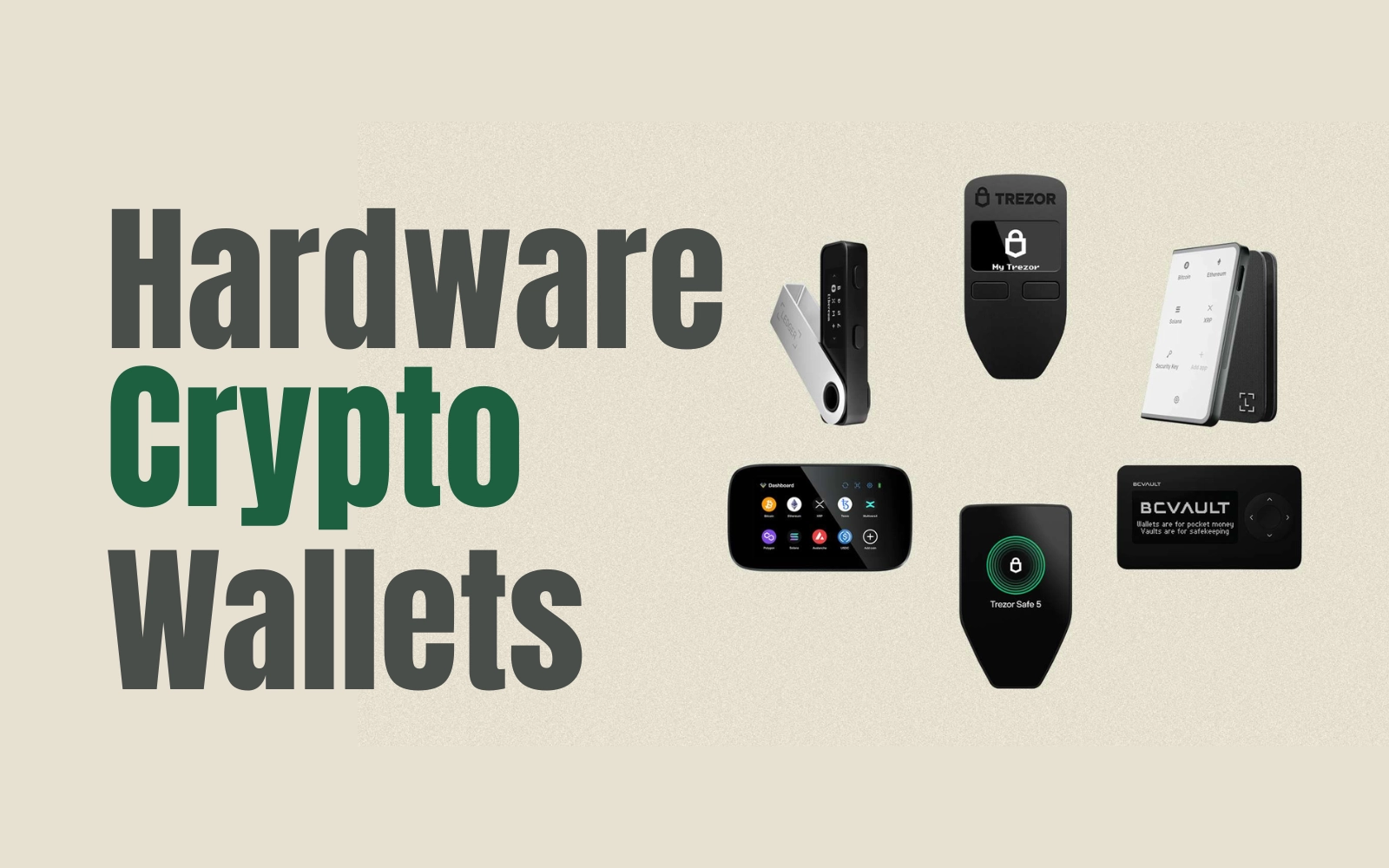
A cold wallet stores your private keys offline, meaning it is not connected to the internet during normal use. Hardware wallets are the most common example. Because they remain offline, cold wallets significantly reduce the risk of remote hacking. They are often used for long-term storage or holding larger balances. The trade-off is convenience, as accessing funds usually requires an extra step, such as connecting the device to a computer. Many people use a combination of both, keeping small amounts in hot wallets for daily use and larger amounts in cold storage for safety.
Hot wallets are online and convenient for frequent use
Cold wallets store keys offline for higher security
Hot wallets carry greater exposure to online threats
Cold wallets are better suited for long-term storage
Many users combine both for balance and flexibility
What is a private key, and why is it so important?
A private key is a secret piece of information that proves ownership of your cryptocurrency. It is essentially the password that allows you to access, move, and control your funds on the blockchain. When you hold crypto in your own wallet, the private key is what authorises transactions. If someone else gains access to your private key, they can take full control of your funds, and transactions cannot be reversed. For this reason, private keys must be kept secure at all times.
Private keys are usually generated automatically when you create a wallet and are often represented indirectly through a recovery phrase to make them easier to back up. Unlike a bank account password, there is no central authority that can reset or recover a lost private key. If it is lost or destroyed, access to the funds is permanently lost. This makes understanding and protecting private keys one of the most important aspects of using cryptocurrency safely.
A private key proves ownership of cryptocurrency
It authorises all transactions from your wallet
Anyone with the key can control the funds
Lost private keys cannot be recovered
Protecting private keys is essential for security
What is a seed phrase, and what happens if I lose it?
A seed phrase, sometimes called a recovery phrase, is a series of words generated when you create a crypto wallet. These words are a human-readable backup of your private keys and allow you to restore your wallet if your device is lost, damaged, or replaced. The seed phrase is the single most important backup for a wallet. Anyone who has access to it can recreate the wallet and access the funds, even without the original device.
If you lose your seed phrase and also lose access to your wallet, your cryptocurrency is effectively gone forever. There is no company, exchange, or blockchain network that can restore it for you. This is why seed phrases should be stored offline, written down carefully, and kept in a secure location. They should never be shared, photographed, or stored in cloud services. Treating your seed phrase with the same seriousness as a legal document or safe combination is critical to long-term crypto security.
A seed phrase backs up your wallet and private keys
It allows full recovery of your crypto funds
Anyone with the phrase can access the wallet
Lost seed phrases mean permanent loss of access
Seed phrases should be stored offline and securely
How do I keep my cryptocurrency safe from hacks and scams?
Keeping cryptocurrency safe requires a combination of good technology choices and cautious behaviour. Using reputable wallets, enabling security features such as two-factor authentication where available, and keeping devices updated all reduce risk. One of the most common threats comes from scams rather than technical hacks. Fake websites, phishing emails, and impersonation messages are frequently used to trick users into revealing private information or signing malicious transactions.
It is important to verify website addresses, avoid clicking unknown links, and never share private keys or seed phrases. Using separate wallets for everyday use and long-term storage can also limit potential damage if something goes wrong. Staying informed and sceptical of offers that sound too good to be true is one of the most effective defences. Crypto security is less about one single tool and more about consistently careful habits.
Use trusted wallets and keep software updated
Never share private keys or seed phrases
Be cautious of links, emails, and messages
Use separate wallets for spending and storage
Treat unexpected offers as potential scams
What is the safest way to store cryptocurrency long term?
The safest way to store cryptocurrency long term is generally to use a cold wallet combined with strong backup practices. Cold wallets keep private keys offline, reducing exposure to online threats. For long-term holders, this approach significantly lowers the risk of hacking or unauthorised access. However, physical security becomes important, as devices and backups must be protected from loss, theft, or damage.
Backing up your seed phrase securely and in multiple safe locations helps protect against accidents. Some users also spread risk by holding assets across more than one wallet. Long-term storage is not just about technology, but also planning and discipline. By minimising access points and avoiding unnecessary transactions, you reduce exposure to mistakes and attacks over time.
Cold wallets offer the highest level of security
Offline storage reduces hacking risk
Secure seed phrase backups are essential
Physical protection of devices matters
Long-term storage benefits from minimal access
What is a crypto exchange, and how does it work?
 A crypto exchange is an online platform that allows users to buy, sell, and trade cryptocurrencies. It acts as a marketplace where buyers and sellers meet, with the exchange providing the technical infrastructure to match orders, process transactions, and hold balances. Most people enter the crypto market through an exchange because it offers a straightforward way to convert traditional money into cryptocurrency or swap one digital asset for another. Exchanges typically display live prices, charts, and order books, making it easier for users to see market activity and place trades.
When you use a crypto exchange, you usually create an account, deposit funds, and then choose how you want to trade. Some exchanges offer simple “buy and sell” options aimed at beginners, while others provide more advanced trading tools such as limit orders, stop orders, and charts. Depending on the platform, the exchange may hold your cryptocurrency on your behalf, which is known as custodial storage. This can be convenient, but it also means you are trusting the platform to safeguard your assets. Understanding how exchanges work helps users decide how much control they want over their funds and how actively they plan to trade.
 Crypto exchanges act as marketplaces for buying and selling digital assets
They allow users to trade crypto against fiat or other cryptocurrencies
Beginner and advanced trading options are often available
Many exchanges hold funds on behalf of users
Exchanges vary widely in features, fees, and ease of use
Do I need an account to use a crypto exchange?
In most cases, yes, you need an account to use a crypto exchange, particularly if you are using a centralised platform. Creating an account allows the exchange to track balances, process trades, and apply security controls to protect your funds. Account creation usually involves providing an email address, setting a strong password, and enabling security features such as two-factor authentication. Some exchanges also require identity verification before you can access all features, especially when converting between crypto and traditional currencies.
Decentralised exchanges are different. They usually do not require a traditional account or registration process. Instead, you connect your own wallet directly to the platform and trade from it. While this removes the need for sign-ups and passwords, it also means you are fully responsible for security, transaction approval, and wallet management. For beginners, centralised exchanges often feel more approachable because of their guided interfaces and customer support. More experienced users may prefer decentralised platforms for greater control and privacy. Understanding the account requirements helps you choose an exchange that matches your experience level and comfort with responsibility.
Centralised exchanges require user accounts
Account setup includes passwords and security settings
Decentralised exchanges usually connect directly to wallets
Accounts provide convenience and customer support
Wallet-based access offers more control but more responsibility
Can I buy cryptocurrency on an exchange using GBP or EUR?
Are crypto exchanges safe, and what security features should I look for?
Crypto exchanges can be safe, but their level of security varies significantly. Well-established exchanges invest heavily in protecting user funds and data, while poorly run platforms may expose users to unnecessary risk. One of the most important things to understand is that exchanges are frequent targets for cyberattacks because they hold large amounts of digital assets. For this reason, security should be a top priority when choosing where to trade. Strong exchanges use measures such as encrypted connections, secure login systems, and internal controls to reduce the risk of unauthorised access.
Users also play a role in security. Even the most secure platform cannot protect an account if weak passwords or unsafe practices are used. Good exchanges provide tools such as two-factor authentication, withdrawal confirmations, and account activity alerts. Transparency also matters. A reputable exchange should clearly explain how it protects funds, how it stores assets, and what happens in the event of a security incident. While no exchange can guarantee zero risk, choosing a platform with strong security features and a good track record greatly reduces the likelihood of problems.
Security standards vary widely between exchanges
Strong platforms use encryption and secure account controls
Two-factor authentication is an essential feature
Transparency around fund storage builds trust
User habits play a major role in account safety
What is the difference between a centralised exchange and a decentralised exchange?
The main difference between a centralised exchange and a decentralised exchange lies in control and custody. A centralised exchange is operated by a company that manages the platform, processes trades, and often holds user funds in custodial wallets. These exchanges are usually easier for beginners to use, offering customer support, simple interfaces, and features such as fiat deposits. However, because the exchange controls the wallets, users must trust the platform to safeguard their assets and operate fairly.
A decentralised exchange works differently. Instead of relying on a central company, it allows users to trade directly with one another using automated systems and smart contracts. Funds typically remain in the user’s own wallet, giving them greater control and reducing reliance on a third party. While this can increase transparency and reduce certain risks, decentralised exchanges often require more technical understanding and may lack customer support. Each type of exchange has advantages and drawbacks, and the right choice depends on experience level, risk tolerance, and how much control the user wants over their funds.
Centralised exchanges are run by companies and hold user funds
Decentralised exchanges allow peer-to-peer trading
Centralised platforms are usually more beginner friendly
Decentralised platforms offer greater user control
Why do crypto exchanges sometimes freeze accounts or withdrawals?
Crypto exchanges may freeze accounts or withdrawals as part of their security and compliance processes. This can happen for several reasons, including suspicious account activity, failed security checks, incomplete verification, or potential breaches of platform rules. Freezes are often designed to protect users and the exchange itself from fraud, hacking, or misuse. While frustrating, they are usually temporary and lifted once the issue is reviewed and resolved.
Another common reason for withdrawal delays is verification. Even if you were able to deposit and trade quickly, an exchange may require additional checks before allowing withdrawals, especially for larger amounts. Technical issues, network congestion, or maintenance can also cause temporary restrictions. Understanding that freezes are often precautionary rather than punitive can help set expectations. Choosing an exchange with clear communication and responsive support makes these situations easier to navigate if they arise.
Account freezes are often linked to security checks
Suspicious activity can trigger temporary restrictions
Verification issues may delay withdrawals
Technical maintenance can affect access
Clear communication reduces frustration
Can I move my crypto off an exchange at any time?
In most cases, yes, you can move your crypto off an exchange whenever you choose, provided your account is in good standing and meets withdrawal requirements. This flexibility is one of the core principles of cryptocurrency ownership. However, exchanges may impose limits, minimum withdrawal amounts, or temporary restrictions due to security checks or maintenance. If you have an active bonus, open positions, or pending verification, withdrawals may be delayed until conditions are met.
It is also important to remember that exchanges hold crypto on your behalf in custodial wallets. Moving funds to your own wallet gives you full control but also full responsibility for security. Many users prefer to keep only trading balances on exchanges and store long-term holdings in personal wallets. Understanding withdrawal rules before depositing helps avoid surprises and allows you to plan how and when you move your funds.
Withdrawals are usually available at any time
Account status and verification affect access
Limits and minimums may apply
Personal wallets give greater control
Planning withdrawals avoids unexpected delays
What should I check before choosing a crypto exchange?
Before choosing a crypto exchange, it is important to look beyond marketing and focus on fundamentals. Start with security features, including account protection options and how the exchange stores funds. Next, review fees, supported assets, and available trading tools to ensure the platform suits your needs. Transparency around ownership, rules, and support channels also matters, as it indicates how the exchange operates behind the scenes.
You should also consider ease of use, especially if you are new to crypto. An exchange with a clear interface and good educational resources can make a big difference. Finally, check whether the platform supports your local currency, payment methods, and withdrawal preferences. A little research upfront helps you choose an exchange that fits your goals and reduces the risk of problems later.
Review security features and fund storage
Compare fees and supported cryptocurrencies
Check ease of use and platform tools
Confirm fiat support and withdrawal options
Look for transparency and responsive support
Whats the difference in KYC and Non-KYC Exchanges?
KYC stands for Know Your Customer and refers to the process crypto exchanges use to verify the identity of their users. When an exchange applies KYC, it typically asks for personal information such as your name, date of birth, and address, along with official documents like a passport or driving licence. Some platforms also request proof of address or a short video check. The main purpose of KYC is to reduce fraud, prevent illegal activity, and meet regulatory requirements in the regions where the exchange operates.
For users, KYC can feel inconvenient, especially if they expect crypto to be fully anonymous. However, verified accounts usually come with benefits such as higher withdrawal limits, access to fiat deposits and withdrawals, and fewer interruptions when moving larger sums of money. KYC can also help protect accounts by making it harder for stolen funds to be withdrawn without triggering checks. Understanding when and why KYC is required helps users avoid unexpected delays, particularly when they try to withdraw funds for the first time.
KYC is an identity verification process
It usually involves ID and proof of address
Required to meet regulatory obligations
Enables higher limits and fiat access
Can reduce fraud and account abuse
What is a non-KYC crypto exchange?
A non-KYC crypto exchange is a platform that allows users to trade cryptocurrency without completing full identity verification. These exchanges typically require only basic account details or, in some cases, no registration at all, especially when trading directly from a personal wallet. Non-KYC exchanges appeal to users who value privacy, want faster onboarding, or prefer not to share personal documents online.
However, using a non-KYC exchange does not mean there are no rules or risks. Many such platforms still apply limits on withdrawals, restrict access to certain features, or introduce verification checks if activity appears unusual. Non-KYC exchanges also tend to focus on crypto-to-crypto trading rather than fiat services, which means you usually need to already own cryptocurrency to use them. While they can offer flexibility, they often provide less customer support and fewer protections if something goes wrong. Understanding these trade-offs is important before choosing a non-KYC platform.
Non-KYC exchanges allow trading without full ID checks
They appeal to privacy-focused users
Usually support crypto-to-crypto trading only
Limits and restrictions may still apply
Customer support is often more limited
Are non-KYC crypto exchanges safe?
Non-KYC crypto exchanges can be safe, but they carry different risks compared to regulated, fully verified platforms. Because they operate with fewer compliance requirements, users may have less protection if disputes arise or funds are lost. Some non-KYC exchanges are well-established and operate transparently, while others may lack clear ownership or long-term accountability. This makes due diligence especially important.
Security features such as encryption, withdrawal controls, and wallet management still matter, regardless of KYC status. Users should also be aware that the absence of identity checks does not guarantee anonymity, as blockchain transactions are publicly recorded. In some cases, non-KYC exchanges may introduce verification later, especially during large withdrawals or suspicious activity. Safety depends on the platform’s reputation, technical security, and how responsibly the user manages their own wallets and access details.
Safety varies widely between non-KYC platforms
Fewer protections may exist if issues arise
Strong technical security is still essential
Anonymity is not guaranteed on blockchains
Research and caution are especially important
Why do some exchanges require KYC while others do not?
The difference usually comes down to regulation, business model, and location. Exchanges that operate in regions with strict financial regulations are often required to apply KYC to comply with local laws. These platforms typically offer fiat services, higher limits, and broader feature sets, which makes compliance unavoidable. Other exchanges choose to operate in ways that limit regulatory exposure, focusing on crypto-only services and minimal data collection.
Some platforms also introduce KYC gradually. They may allow basic trading without verification but require it later for withdrawals or higher limits. This approach can feel inconsistent to users if it is not clearly explained upfront. Understanding why an exchange requires or avoids KYC helps set realistic expectations and prevents frustration when account limits or verification requests appear later.
Regulation influences whether KYC is required
Fiat services almost always trigger KYC
Crypto-only platforms may avoid full verification
Some exchanges apply KYC at withdrawal stage
Clear policies reduce user confusion
How should I choose between a KYC and non-KYC exchange?
Choosing between a KYC and non-KYC exchange depends on your priorities, experience level, and how you plan to use cryptocurrency. If you want access to fiat deposits, higher limits, customer support, and a more traditional user experience, a KYC exchange may be more suitable. These platforms often feel more familiar to users coming from traditional finance and can be easier to use for beginners.
If privacy, speed of access, and control over personal data matter more to you, a non-KYC exchange may be appealing. However, you should be comfortable managing your own security and accepting reduced support if problems occur. In either case, the most important factors are transparency, security practices, and clear rules. Choosing an exchange should be a considered decision rather than a reaction to marketing claims.
KYC exchanges suit users who want fiat access and support
Non-KYC exchanges appeal to privacy-focused users
Experience level should guide your choice
Security and transparency matter more than labels
Always review limits and withdrawal rules first
What is cryptocurrency trading?
 Cryptocurrency trading is the process of buying and selling digital assets with the aim of profiting from price movements. Unlike traditional financial markets, crypto markets operate around the clock, which means prices can change at any time, including weekends and holidays. Traders can take advantage of both short-term volatility and longer-term trends, depending on their strategy and experience. Some people trade actively, opening and closing positions frequently, while others trade less often and focus on broader market movements.
Crypto trading typically takes place on exchanges, where users can choose from different trading pairs, such as a cryptocurrency against another crypto asset or against a fiat currency. Trading can be simple, using instant buy and sell features, or more advanced, using order types such as limit orders and stop orders. While trading offers opportunities, it also carries risk. Prices can move quickly, and losses can happen just as fast as gains. Understanding how trading works, and recognising the difference between speculation and long-term investing, is essential before committing funds.
 Crypto trading focuses on buying and selling for price movement
Markets operate 24 hours a day, seven days a week
Trading can be short term or longer term
Exchanges provide tools for executing trades
Risk management is essential in volatile markets
How do trading fees work on crypto exchanges?
Trading fees are charges applied by crypto exchanges when you buy or sell cryptocurrency. These fees are usually calculated as a percentage of the trade value and are deducted automatically when the trade is executed. Many exchanges use a pricing model where fees differ depending on whether you add liquidity to the market or remove it. This means placing certain types of orders may cost slightly less than others.
In addition to trading fees, some exchanges apply fees for deposits, withdrawals, or currency conversions. Blockchain network fees are also involved when moving cryptocurrency on or off the exchange, and these are separate from the platform’s own charges. Over time, fees can add up, particularly for users who trade frequently or in small amounts. Understanding how fees are structured helps you choose an exchange that suits your trading style and prevents unexpected costs. Transparent exchanges clearly display their fee schedules and explain how charges are calculated.
Trading fees are usually a percentage of each trade
Fees may differ based on order type
Network fees apply when moving crypto off the exchange
Frequent trading increases total fee costs
Clear fee structures help with cost planning
What is the difference between spot trading and futures trading?
Spot trading involves buying or selling cryptocurrency at the current market price and owning the asset directly. When you trade on the spot market, you exchange one asset for another, and the transaction settles immediately. Spot trading is generally considered the most straightforward and accessible form of crypto trading, making it popular with beginners and long-term holders.
Futures trading, by contrast, involves trading contracts based on the future price of a cryptocurrency rather than the asset itself. These contracts often allow the use of leverage, which means traders can open larger positions with a smaller amount of capital. While this can amplify profits, it also increases risk significantly. Futures trading requires a strong understanding of market behaviour, margin requirements, and liquidation risk. It is best suited to experienced traders who actively manage their positions.
Spot trading involves direct ownership of crypto
Futures trading uses contracts based on price movements
Spot trading is simpler and lower risk
Futures trading allows leverage and short positions
Experience and discipline are crucial for futures
What other costs should I consider when trading crypto?
Beyond trading fees, there are several other costs to consider when trading cryptocurrency. Withdrawal fees can apply when moving funds off an exchange, and these often depend on the blockchain network used. Some exchanges also charge conversion fees when swapping between fiat currencies or between different cryptocurrencies. In addition, price spreads, the difference between buy and sell prices, can affect how much you actually pay or receive on a trade.
There may also be indirect costs, such as slippage during periods of high volatility, when trades are executed at slightly worse prices than expected. Understanding all potential costs helps you better evaluate whether a trade is worthwhile and prevents unpleasant surprises.
Withdrawal and network fees may apply
Conversion fees can affect multi-currency trading
Price spreads influence real trade costs
Volatility can cause slippage
Total costs go beyond headline trading fees
Is crypto trading suitable for beginners?
Crypto trading can be suitable for beginners, but only when approached with caution and realistic expectations. Beginners should start with small amounts, use simple trading tools, and focus on learning how markets behave rather than chasing quick profits. Education, patience, and discipline are more important than complex strategies.
Trading without preparation can lead to losses, especially in fast-moving markets. Beginners often benefit from focusing on spot trading first and avoiding leveraged products until they gain experience.
Beginners should start small and learn gradually
Spot trading is more suitable than leveraged trading
Education reduces costly mistakes
Emotional control is important
Trading should be approached responsibly