







What Is Bitcoin? A Beginner-Friendly Guide to How It Works and Why It Matters
Bitcoin is the most recognised cryptocurrency in the world, but it is better understood as a system than a simple “coin”. At its heart, Bitcoin is a decentralised payment network that allows people to send value directly to one another, without needing a bank, card provider, or payment app to approve the transaction. The concept was first published in 2008 as a proposal for a peer-to-peer electronic cash system that could operate without relying on a trusted third party.
Bitcoin has become famous for price swings and headlines, but its underlying concept is what made it historic. It introduced a way to keep a shared, public record of transactions that anyone can verify, while still allowing individuals to control their own funds through cryptographic keys. Whether you see Bitcoin as a long-term store of value, a censorship-resistant payment method, or a technological breakthrough, understanding the basics helps you cut through hype and make more grounded decisions.
 Bitcoin is the first widely adopted decentralised digital currency, powered by a public blockchain ledger
The network uses Proof of Work mining to validate transactions and secure the chain
Bitcoin’s supply is capped at 21 million, with issuance reduced through halving events every 210,000 blocks
Wallets store the keys that control your bitcoin, and security choices matter more than most beginners expect
Bitcoin can be used for payments, but many people treat it as “digital gold” due to scarcity and long-term holding behaviour
What Exactly Is Bitcoin?
Bitcoin is a digital asset and a set of network rules that allow value to move online in a way that does not depend on central control. When people say they “own bitcoin”, they do not own a physical coin or a file stored on a device. Instead, they control the ability to spend bitcoin associated with specific addresses recorded on the blockchain. That control comes from private keys, which are long cryptographic codes that prove you have the right to move funds. If you control the private keys, you control the bitcoin. If someone else controls them, such as an exchange or custodial wallet provider, then they ultimately control access, even if an app shows a balance.
This design is why Bitcoin is often described as permissionless. You do not need an account approval process, you do not need a bank manager, and you do not need to be in a particular country to receive funds. You only need a wallet and an internet connection. That accessibility is a major part of why Bitcoin is still discussed as a breakthrough, even as the wider crypto ecosystem has expanded far beyond the original idea.
 Bitcoin ownership is based on key control, not identity
The network is open to anyone, with no membership requirement
Balances are derived from the blockchain’s transaction history
Custodial versus self-custody is a key decision for users
Why Was Bitcoin Created?
Bitcoin was created to solve a specific issue in digital money called the double-spend problem. With digital files, copying is easy, which means a purely digital “coin” could be duplicated and spent twice unless a trusted authority keeps the master ledger. Traditional finance solves this with centralised databases held by banks and payment networks. Bitcoin proposed a different approach, a public ledger shared across a network, where participants can agree on which transactions are valid without relying on a single organisation. That proposal is the foundation of everything that followed in crypto.
It also introduced a different trust model. Instead of trusting a bank to update balances honestly, users can verify network rules and transaction history independently. This is not the same as claiming Bitcoin is “trustless” in a human sense, because people still trust software, devices, and their own security habits. However, the core shift is that trust becomes more distributed, less dependent on one institution, and more dependent on transparent verification.
 Bitcoin was designed to prevent double spending without a central authority
It replaces a single master ledger with a distributed, verifiable ledger
Network rules are enforced through consensus, not corporate policy
The model reduces reliance on permissioned intermediaries

How Bitcoin Works, The Blockchain Explained Simply
Bitcoin’s blockchain is a shared public ledger that records transactions in chronological order. Copies of this ledger are stored across a global network of computers, commonly called nodes. When you send bitcoin, your transaction is broadcast to the network, where it is checked against the rules, such as whether the inputs are valid and not already spent. Valid transactions are grouped into blocks, and new blocks are added to the chain over time, creating an ongoing history that is extremely difficult to alter once confirmed.
This is a big reason Bitcoin is considered resilient. There is no central server to shut down, and no single database administrator who can change entries. To rewrite history, an attacker would need to outcompete the honest network under Proof of Work, which is intentionally resource-intensive. That does not mean scams and theft do not occur, because most real-world losses happen through exchange hacks, phishing, and poor key management, not through someone “hacking the blockchain” directly.
The blockchain is a public ledger shared across many nodes
Transactions are grouped into blocks, then added in order
Confirmations increase confidence that a transaction is final
Many user losses come from wallet and exchange security issues
Proof of Work and Mining, What It Does and Why It Exists
Bitcoin uses Proof of Work as its consensus mechanism, which is the method the network uses to agree on the next valid block. Miners compete to solve a cryptographic puzzle, and the first to find a valid solution earns the right to add the next block of transactions. This process helps secure the network because it makes block production costly, and therefore makes attacks costly too.
Mining also plays a role in Bitcoin’s monetary issuance. Miners receive block rewards, which include newly issued bitcoin plus transaction fees, and this incentivises them to contribute computing power. Over time, that issuance reduces via halving events, shifting the network’s economics increasingly toward fee-based incentives. Mining is sometimes criticised for energy use, but from a design perspective, that cost is not accidental. It is part of what makes attacks difficult and consensus robust in an open network.
 Proof of Work is the mechanism that secures Bitcoin’s consensus
Mining adds blocks and helps prevent fraudulent transaction history
Miners earn rewards and fees for valid block production
The energy cost is tied to the security model, not an afterthought
Bitcoin’s Supply, Scarcity, and Halving Events
Bitcoin’s supply is capped at 21 million, and its issuance schedule is built into the protocol. One of the most important features is the halving, where the block reward is cut in half every 210,000 blocks, which historically works out at roughly every four years. This mechanism reduces the rate of new supply entering circulation over time and is a key reason Bitcoin is often compared to scarce commodities.
Over the long run, this also means the network approaches a point where almost all bitcoin has been issued, and miners rely more heavily on fees. The final issuance is commonly estimated to occur around the year 2140. This scarcity narrative is a major part of Bitcoin’s identity, but it is worth remembering that scarcity alone does not guarantee price appreciation. Demand, market structure, regulation, macroeconomics, and user adoption all shape outcomes.
 Bitcoin’s issuance is scheduled, predictable, and capped
Halving events reduce new supply approximately every four years
The long-term supply limit is 21 million bitcoin
The final issuance is commonly estimated to occur around 2140
What Is a Bitcoin Wallet?
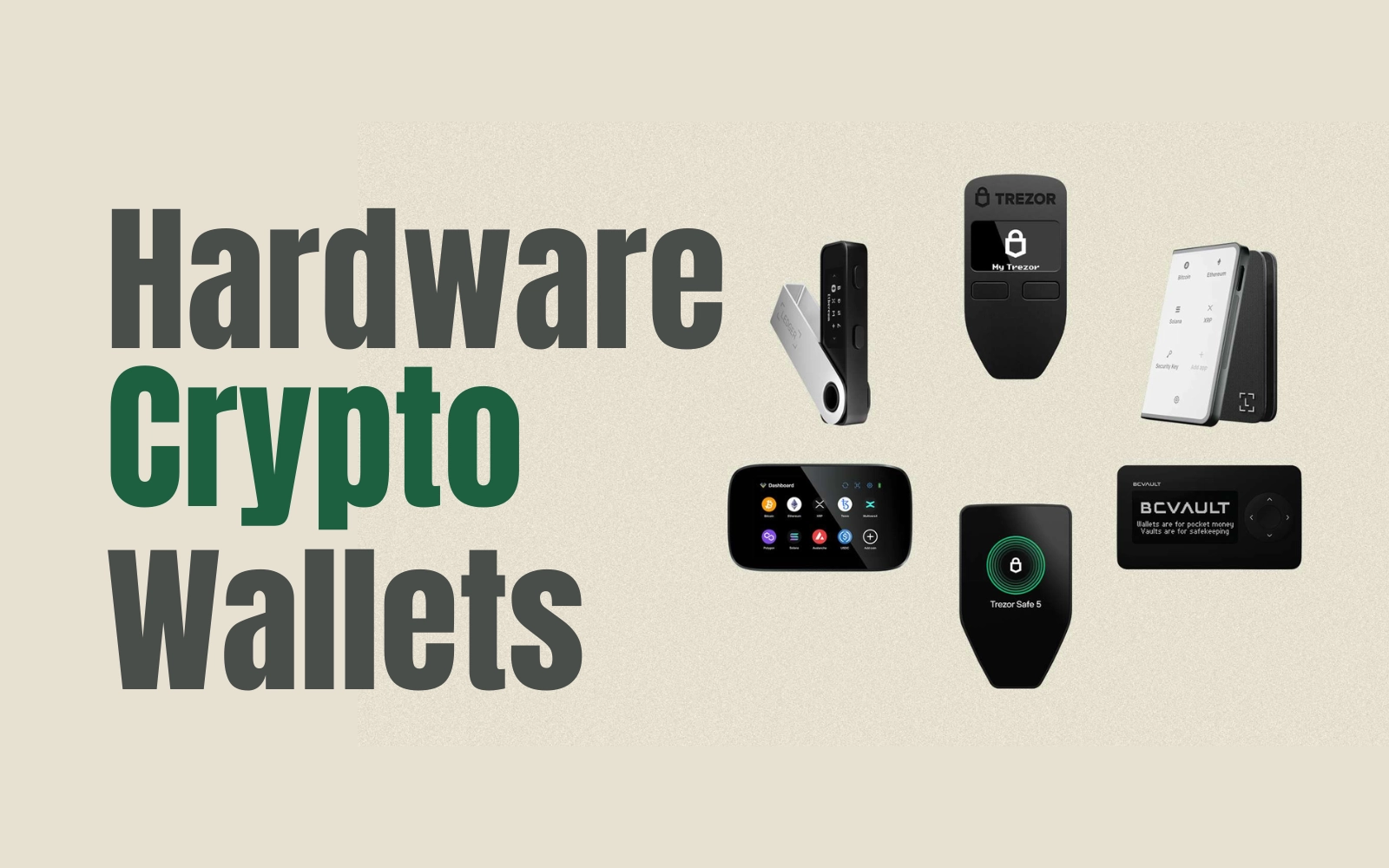
A Bitcoin wallet is not a container that “holds” coins like a physical wallet holds cash. It is a tool that stores and manages your keys, allowing you to sign transactions and prove ownership. Wallets typically generate a public address that others can send bitcoin to, and they protect the private key needed to spend from that address. Wallets come in many forms, including mobile apps, desktop software, hardware devices, and paper backups. A common distinction is hot wallets versus cold wallets. Hot wallets are connected to the internet and are convenient for frequent use, while cold storage keeps keys offline and is generally considered more secure for long-term holding.
Another major distinction is custodial versus non-custodial. Custodial wallets, often provided by exchanges, mean the provider controls the keys on your behalf. Non-custodial wallets mean you control the keys yourself. Self-custody gives you more independence, but it also puts responsibility on you to back up recovery phrases and avoid phishing. This is why Bitcoin security education is not optional. It is part of the product experience.
 Wallets manage private keys, which control spending rights
Hot wallets are convenient but increase online exposure
Cold storage reduces internet risk and is popular for long-term holding
Custodial wallets trade independence for convenience and support
Bitcoin Transactions, Fees, and Confirmation Times
When you send bitcoin, your wallet creates a transaction, signs it with your private key, and broadcasts it to the network. Miners prioritise transactions based on fees, especially during periods of higher network demand, because blocks have limited capacity. This means fees can rise during busy periods, and confirmation times can vary depending on fee levels and congestion. Over time, additional layers and payment channels have been developed to improve everyday usability, but on the base layer, the model is still designed around security and decentralisation first.
It is also important to understand that Bitcoin transactions are generally irreversible once confirmed. In traditional banking, chargebacks and dispute processes exist because transactions are mediated by institutions. With Bitcoin, the trade-off for permissionless transfers is that user mistakes can be final. This is why the “test transaction” habit exists, where people send a small amount first when moving large balances. It is not a bad idea. It is a practical security pattern.
Fees influence how quickly miners include a transaction in a block
Confirmation times can vary depending on network demand
Bitcoin transactions are difficult to reverse once confirmed
Small test sends can reduce the risk of costly mistakes
Why Bitcoin Matters, Beyond Price and Headlines
Bitcoin’s importance is often reduced to price charts, but its bigger contribution is the idea that value can be moved globally without relying on a central administrator. That is significant for cross-border transfers, censorship resistance, and financial access, but it is also significant as a technical precedent. Bitcoin introduced a model where the ledger is public, verification is open, and the system can function with no permissioned operator. That principle has influenced an entire industry of decentralised networks, even when those networks use different consensus models or aims.
At the same time, Bitcoin is not a perfect solution for every financial problem. It comes with volatility, user responsibility, regulatory complexity, and security risks. That is why balanced education matters. Bitcoin can be both a breakthrough technology and a risky asset class, depending on how it is used and what expectations are placed on it.
 Bitcoin enables value transfer without central intermediaries
It set the blueprint for decentralised ledger systems
It carries real risks, especially for inexperienced users
Understanding trade-offs is part of using it responsibly
Getting Started With Bitcoin, A Sensible Beginner Path
If you are new to Bitcoin, your best first step is not buying, it is understanding. Learn what private keys are, what a wallet does, how fees work, and what risks exist. Once you feel comfortable, try a small transaction to see how it works in real life. Practical experience makes the concepts stick, and it helps you understand what you are actually doing when you move funds.
If you decide to buy bitcoin, be cautious about where you purchase and how you store it. Many people start with a reputable exchange for convenience, then move some funds to a personal wallet for better control. There is no one-size-fits-all approach, but there is one universal rule: do not rush, and do not treat security as an afterthought.
Start with education, not hype-driven buying
Try a small transaction to learn the mechanics safely
Decide whether self-custody suits your comfort level
Prioritise security practices from day one
Bitcoin is a decentralised digital currency and payment system designed to work without a central authority. It operates on a public blockchain ledger, secured through Proof of Work mining, and governed by a fixed issuance schedule that caps supply at 21 million. Those core traits are why Bitcoin is often described as both a technological milestone and a new category of asset.
If you strip away noise, Bitcoin is best understood as a system that lets people hold and transfer value with fewer intermediaries, but with more personal responsibility. Whether you plan to use it, invest in it, or simply understand it, learning the fundamentals puts you in a far stronger position than following headlines. Crypto rewards patience, especially at the beginning.
-
Bitcoin is a network with rules, not a product sold by a company
-
Its security model is built around verification and economic incentives
-
Scarcity is engineered through supply caps and halving cycles
-
Responsible use starts with understanding wallets and security
#BITCOIN #WHATISBITCOIN #BITCOINNEWS #BITCOINPRICES