







While hot wallets offer speed and simplicity, enabling seamless trading and active management of crypto assets, they are inherently more exposed to potential online security risks than offline storage options. Their constant connection to the internet makes them more vulnerable to cyber threats such as phishing, malware, or account breaches, so users must adopt robust security practices such as strong passwords, two-factor authentication, and careful device management.
Despite some security trade-offs, software and hot wallets remain a cornerstone of the crypto ecosystem, especially on top rated exchanges. They provide a user-friendly gateway for beginners and experienced traders alike, making digital asset management accessible while supporting a wide range of tokens and blockchain interactions.
Key Highlights of Software and Hot Wallets
 Internet-connected convenience: Hot wallets keep users online and ready to trade, send and receive crypto instantly. Usability across devices: Available as mobile, desktop, and browser solutions for flexibility. Best for active users: Ideal for trading, staking, and DeFi interactions on exchanges and apps. Security considerations: More exposed to online threats than offline solutions, so strong protection measures are crucial.

Pros
 Excellent compatibility with Ethereum and EVM dApps
Available on both browser and mobile for flexible access
Strong control over connected sites and transaction permissions
Easy to add and manage multiple EVM networks
Large ecosystem support, widely integrated across Web3 platforms
Cons
 Common target for phishing and fake support scams
Can feel technical for first-time users (fees, approvals, network settings)

Pros
Strong multi-chain support for managing varied portfolios
Mobile-first design that suits frequent transactions
Built-in swapping for quick asset exchanges
Web3 access for dApps and NFTs in supported environments
Simple onboarding and easy-to-use interface
Cons
Common target for phishing and fake support scams
As a hot wallet, it relies heavily on good phone security habits
Some features vary depending on chain, token, and region

Pros
 Self-custody control rather than leaving assets on an exchange
Supports multiple networks, including Ethereum ecosystems and Solana
Designed to make dApp and NFT activity more approachable
Clear user experience suited to beginners and mainstream users
Useful for users who want one wallet that can span multiple ecosystems
Cons
 Common target for phishing and fake support scams
Some users confuse it with the Coinbase exchange account
Hot wallet risks still apply if a device or recovery phrase is compromised

Pros
Very beginner-friendly design and navigation
Strong desktop experience for managing and tracking holdings
Built-in swaps for convenient exchanges
Staking options available for certain supported assets
Great for everyday use and portfolio visibility
Cons
Common target for phishing and fake support scams
Not the most DeFi-first option for constant dApp browser workflows
Still best treated as a hot wallet for active balances, not long-term storage

Pros
Excellent experience for Solana tokens, NFTs, and dApps
Clean interface that’s easy for beginners to learn
Multi-chain direction reduces the need to juggle multiple wallets
Strong everyday usability for frequent transactions
Popular across Web3 communities, with broad integration support
Cons
Common target for phishing and fake support scams
Best fit depends on the chains you use most
Hot wallet risks remain, especially around phishing and malicious approvals
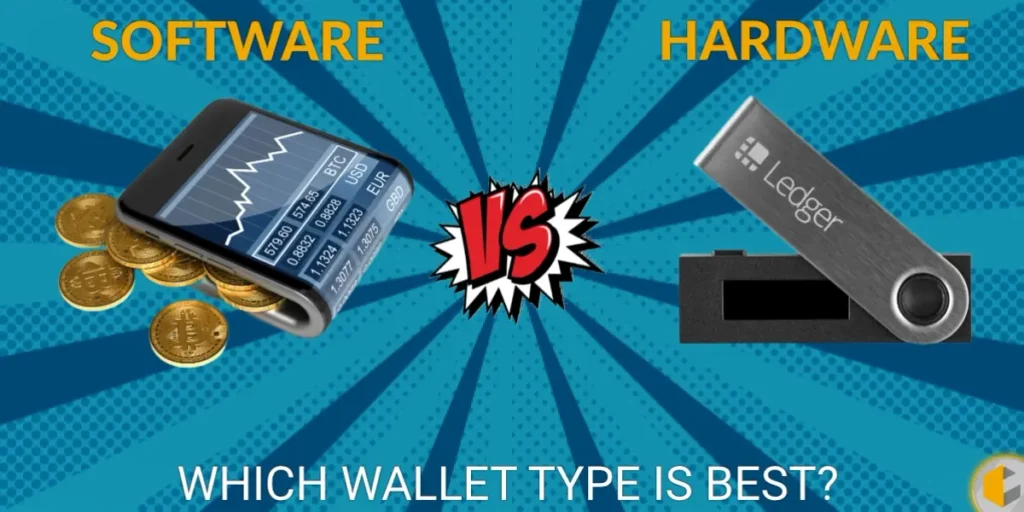
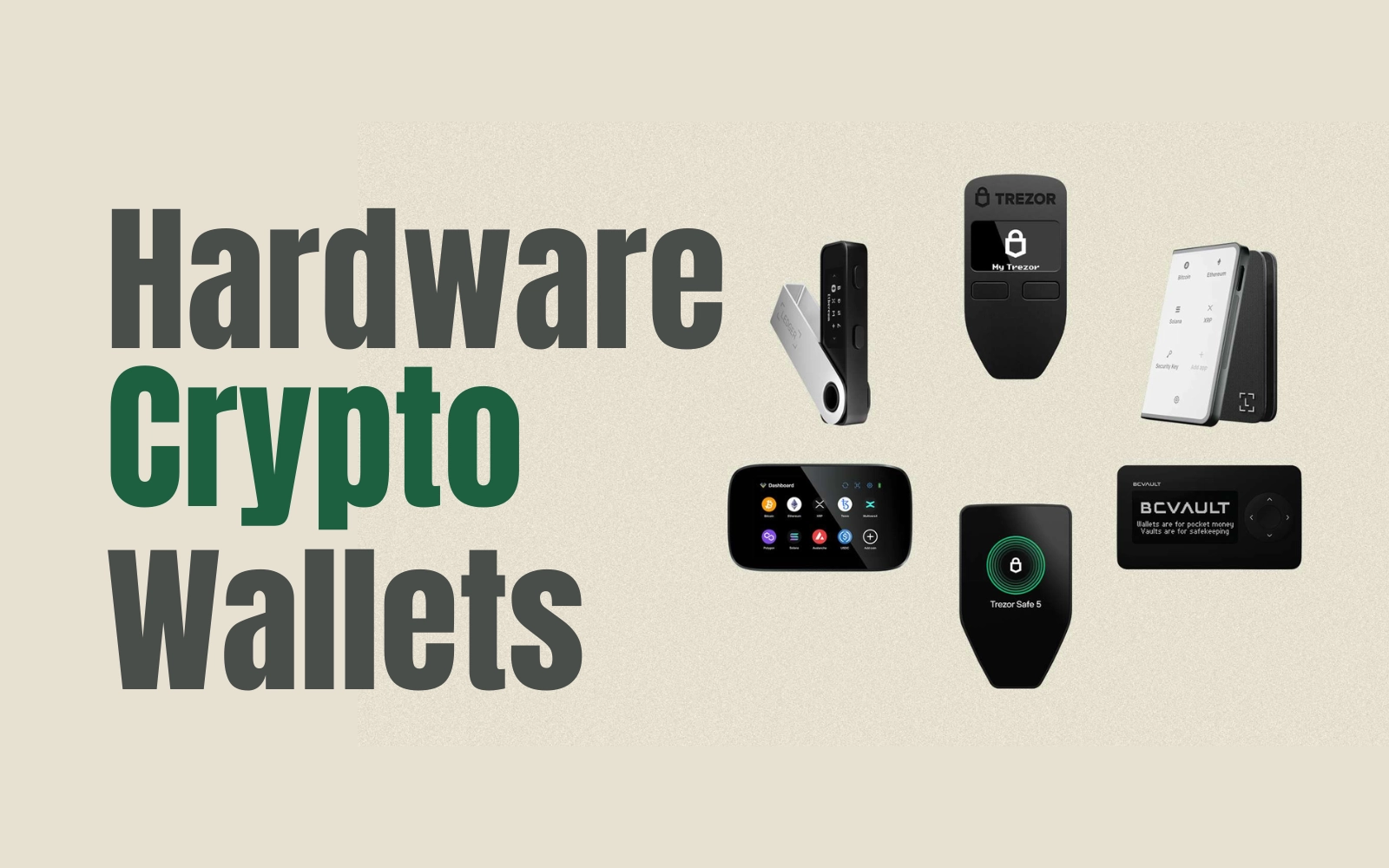
A software wallet (often called a hot wallet) is an app, browser extension, or desktop program that stores and manages your crypto keys on an internet-connected device, which makes it ideal for day-to-day use like swapping tokens, moving funds between exchanges, and connecting to DeFi or NFT platforms. A hardware wallet (often called a cold wallet) is a dedicated physical device that keeps your private keys offline, so it’s typically the safer option for storing larger balances over the long term. In practice, most people end up using both: a software wallet for convenience and quick transactions, and a hardware wallet as the “vault” for savings, because the best security setup is usually about matching the tool to the task rather than picking one forever.
 Software wallets suit active users who trade, swap, or use dApps regularly.
Hardware wallets suit long-term holders who prioritise security over speed.
Many users keep a small “spending” balance in software and the rest in hardware.
Your habits matter: backups, updates, and scam awareness are crucial either way.
Key differences that actually matter
Software wallets win on speed and simplicity because you can install them in minutes, log in from your phone or browser, and move quickly across networks or decentralised apps. The compromise is exposure: because the wallet lives on an internet-connected device, you’re more vulnerable to threats like phishing, fake wallet extensions, malware, SIM swap attacks, and social engineering. Hardware wallets reduce those risks by keeping the private keys offline and requiring physical confirmation of transactions on the device, which makes remote attacks much harder. The trade-off is convenience: you need the device with you, transaction signing takes longer, and setup feels more serious, but that’s exactly why they’re favoured for larger holdings.
 Software wallets are quicker for daily use, trading, and Web3 logins.
Hardware wallets add friction on purpose, which improves protection.
Hot wallets are most at risk from phishing and compromised devices.
Cold wallets are most at risk from lost devices and poor backup handling.
Quick comparison table
| Feature | Software Wallet (Hot) | Hardware Wallet (Cold) |
|---|---|---|
| Best for | Everyday spending, trading, DeFi | Long-term storage, larger balances |
| Internet connection | Yes (device is online) | Keys stored offline |
| Security profile | Higher exposure to online threats | Stronger protection against remote attacks |
| Convenience | Very high | Moderate |
| Typical setup | App or extension | Physical device + setup process |
| Cost | Usually free | Paid device |
The best setup for most people
A practical approach is to use a two-wallet system: keep a small, comfortable amount in a software wallet for swaps, spending, and on-chain activity, then move the bulk of your holdings to a hardware wallet for long-term protection. This reduces the impact of mistakes and scams because even if your hot wallet is compromised, your “main” funds are not sitting on an always-online device. It also helps you build better habits, like regularly moving profits off exchanges, limiting how much you expose to dApps, and keeping backups organised. If you’re writing this for your website, you can frame it as “use hot wallets for action, cold wallets for storage,” which is simple, memorable, and true.
Keep only what you can afford to risk in a hot wallet.
Use a hardware wallet for savings and long-term holds.
Move funds off exchanges when you’re not actively trading.
Treat recovery phrases like the master key, store them safely offline.


What is a software wallet, and what makes it a hot wallet?
 What is a crypto wallet? – A software wallet is a digital application that allows users to store, send, receive, and manage cryptocurrency by controlling the private keys associated with their blockchain addresses. These wallets are typically installed as mobile apps, desktop software, or browser extensions, and they are described as hot wallets because they operate on devices that are connected to the internet. This constant connectivity allows transactions to be approved quickly and makes it easy to interact with decentralised applications, exchanges, and blockchain services without additional hardware.
The defining characteristic of a hot wallet is convenience rather than maximum isolation. Because it is always online, it supports fast transfers, token swaps, and seamless Web3 access, which is why hot wallets are widely used by traders and everyday crypto users. Most software wallets are self-custody, meaning the user is responsible for safeguarding the recovery phrase that controls access to the wallet. There is no central authority that can reset or recover access if this phrase is lost or compromised.
In practical terms, software wallets are best suited for active use rather than long-term storage of large balances. They form a core part of the crypto ecosystem by making blockchain participation accessible, but they require users to understand basic security responsibilities.
 Software wallets are apps or extensions that manage crypto access
Hot wallets are connected to the internet for fast transactions
Most are self-custody, placing responsibility on the user
Designed for everyday use rather than deep storage
Central to trading, DeFi, and Web3 activity
Are hot wallets safe for storing cryptocurrency?
Hot wallets can be safe when used correctly, but their security depends heavily on user behaviour and device hygiene. Because they operate on internet-connected devices, they are more exposed to phishing attacks, fake apps, malicious browser extensions, and malware than offline storage solutions. This does not mean hot wallets are inherently unsafe, but it does mean they require more attention and discipline from users.
Most real-world losses involving hot wallets occur due to scams or mistakes rather than failures of the wallet software itself. Users may be tricked into revealing their recovery phrase, approving malicious transactions, or installing unofficial versions of wallet apps. When basic precautions are followed, such as downloading wallets only from official sources, keeping devices updated, and never sharing recovery phrases, hot wallets can be used safely for everyday activity.
From a risk management perspective, hot wallets are best used for smaller balances that are actively moved or traded. Larger or long-term holdings are usually better protected in cold storage. Many experienced users adopt a layered approach, combining hot wallets for convenience with hardware wallets for security.
Safe when paired with strong security habits
Higher exposure to phishing and device-level threats
Most losses result from scams, not wallet flaws
Best for active, smaller balances
Often used alongside cold storage
What are the biggest risks of using a software wallet?
The primary risks associated with software wallets stem from social engineering and device compromise rather than the underlying blockchain technology. Phishing is the most common threat, where scammers impersonate wallet providers, exchanges, or support teams to trick users into revealing recovery phrases or signing malicious transactions. These scams often rely on urgency and appear through emails, social media, or messaging apps.
Malware is another major risk, particularly on poorly secured computers. Malicious software can interfere with browser extensions, alter clipboard addresses, or capture sensitive data. SIM swap attacks are also relevant when users rely on SMS-based security for linked accounts such as email or exchanges, allowing attackers to intercept verification codes.
What makes these risks serious is the irreversible nature of blockchain transactions. Once funds are moved, they cannot usually be recovered. This places a strong emphasis on prevention, education, and conservative wallet usage. Users who understand common scam patterns and limit permissions and balances typically avoid most problems.
 Phishing targets recovery phrases and approvals
Malware exploits insecure devices
SIM swaps affect linked accounts
Blockchain transactions are irreversible
Awareness reduces most real-world risk
How much crypto should I keep in a hot wallet versus cold storage?
There is no fixed amount that suits everyone, but a widely accepted guideline is to keep only what you actively use in a hot wallet and store the rest in cold storage. Hot wallets are designed for convenience, not maximum protection, so as balances increase, so does the potential impact of a single mistake. Even experienced users can fall victim to convincing scams, which is why limiting exposure is considered best practice.
Many people compare this setup to traditional banking. A hot wallet functions like a current account for spending and transactions, while a hardware wallet acts more like a savings account for long-term holdings. This approach balances usability and security without forcing users to sacrifice either.
It is also important to review balances regularly. As cryptocurrency prices fluctuate, a wallet that once held a small amount may grow into a significant holding. Periodic rebalancing helps maintain appropriate risk levels over time.
 Keep active funds in hot wallets
Store long-term holdings in cold storage
Treat hot wallets like spending accounts
Review balances as values change
Move excess funds periodically
What is the difference between a hot wallet and leaving funds on an exchange?
The main difference between a hot wallet and an exchange account is who controls the private keys. When funds are held on an exchange, the platform controls the keys and users access their balance through a login system. This is known as custodial storage. With most hot wallets, users hold their own keys and control access through a recovery phrase, which is known as self-custody.
Exchanges are convenient for trading and fiat conversions, but they introduce platform-level risks such as account freezes, withdrawal limits, or regulatory changes. Self-custody wallets remove reliance on a third party, but they also place full responsibility for security on the user. There is no customer support process to reverse mistakes or recover lost access.
Many users combine both approaches. Funds are kept on an exchange only while actively trading, then withdrawn to a wallet when not needed. This reduces dependency on any single provider and spreads risk.
 Exchanges are custodial, wallets are usually self-custody
Wallets give direct control over assets
Exchanges introduce platform risk
Self-custody increases responsibility
Many users use both strategically
What is a seed phrase or recovery phrase, and why is it so important?
A seed phrase, also known as a recovery phrase or mnemonic, is a sequence of words that acts as the master key to a self-custody wallet. Anyone with access to this phrase can recreate the wallet and take full control of its funds. For this reason, it is the most sensitive piece of information associated with a software wallet.
Wallet providers design systems so they cannot access or reset recovery phrases. This protects users from third-party interference but also means there is no fallback if the phrase is lost. If a device fails or is stolen, the seed phrase is the only way to restore access. If both the device and the phrase are lost, funds may be permanently inaccessible.
Because of its importance, users should treat the seed phrase with the same care as irreplaceable documents. It should never be shared, photographed, or entered into websites. Understanding this concept is central to safe self-custody.
 The seed phrase controls wallet access
Anyone with it can take the funds
Providers cannot recover it for you
Required to restore wallets on new devices
Must be stored securely offline
Where should I store my seed phrase, and what should I never do with it?
The safest way to store a seed phrase is offline, written clearly and kept in a secure location protected from loss, theft, fire, and water damage. Many users store it in a secure physical location, while others use durable metal backups designed to withstand environmental risks. The key principle is that the phrase should remain private and inaccessible to unauthorised people.
What users should never do is store the seed phrase digitally in places such as cloud storage, screenshots, email drafts, or unencrypted notes. Digital storage increases the risk of exposure through malware, account breaches, or syncing across devices. Wallet providers also warn never to enter the recovery phrase on any website or share it with anyone claiming to be support.
For added resilience, some users keep multiple physical copies in separate secure locations. This reduces the risk of permanent loss due to accidents.
Store seed phrases offline
Protect against fire and water damage
Never store as photos or cloud notes
Never share with anyone
Consider multiple secure backups
What happens if I lose my phone or computer with the wallet installed?
Losing a phone or computer that has a software wallet installed can feel alarming, but the outcome depends on whether you still have your seed phrase (recovery phrase) and how well your device was secured. In most self-custody wallets, your crypto is not “stored on the phone”, it is stored on the blockchain, and your device simply holds the keys that let you access it. If you still have your seed phrase, you can usually restore the wallet on a new device by reinstalling the same wallet app and choosing the restore option. That is why the seed phrase is the real lifeline, not the device itself.
If the device is lost or stolen, it is wise to assume it could be compromised, especially if it was not protected by a strong passcode or if it contained other sensitive accounts such as email. A cautious approach is to restore your wallet on a clean, secure device and move funds to a new wallet address, because that breaks any potential access the thief might gain later. It is also sensible to review connected apps and token approvals if you used DeFi, and to tighten security on related accounts. Device locks help, but they are not a substitute for proper backups and quick action when something goes missing.
 Restore the wallet on a new device using your seed phrase
If stolen, move funds to a fresh wallet address as a precaution
Check and secure email, exchange logins, and cloud accounts linked to the device
Review connected dApps and revoke old token approvals if relevant
Improve future protection with strong passcodes, updates, and secure backups
Can I recover my wallet if I forget my password but still have the seed phrase?
In most software wallets, the password, PIN, or biometric lock is a local security layer that protects the wallet app on a particular device, but it is not the same thing as the seed phrase. The seed phrase is the master backup that recreates your wallet and restores full access to your funds on any compatible wallet app. So, if you forget your password but you still have your seed phrase, you can usually recover by reinstalling the wallet app and using the “restore wallet” option, or by restoring the seed phrase on a different device. This is exactly why self-custody wallets emphasise writing down the seed phrase during setup and storing it offline.
It is important to understand the trade-off: self-custody wallets typically cannot reset your password for you, because the provider does not hold your keys and does not have access to your wallet. That is a security benefit, but it also means your recovery process is entirely in your hands. Be cautious of websites or messages offering “wallet recovery” services, because scammers often use password panic to trick people into entering seed phrases into fake pages. The safest recovery route is always through the official wallet app, downloaded from an official source, on a device you trust.
Passwords lock the app locally, seed phrases restore the wallet globally
Reinstall and restore using the seed phrase if you cannot unlock the app
Wallet providers usually cannot reset self-custody access
Avoid “recovery services” websites, they are commonly scams
Keep seed phrases offline, legible, and protected from loss or damage
What should I do if I think my wallet has been compromised?
If you suspect your wallet has been compromised, act quickly and assume the attacker may already have enough access to cause further loss. The safest first move is to create a brand-new wallet on a clean, secure device and transfer your funds to the new address immediately. This matters because many compromises involve stolen seed phrases, malicious browser extensions, fake wallet apps, or risky DeFi approvals, and once an attacker has a foothold, delays can be costly. If you cannot move everything at once, prioritise high-value assets first, then return to mop up smaller tokens.
Once funds are secured, take a methodical approach to identifying what happened. Check recent transactions and connected dApps, and revoke token approvals you do not recognise or no longer need, because approvals can allow contracts to move tokens without requiring a fresh confirmation each time. Scan devices for malware, remove unknown extensions, update your operating system, and change passwords for your email and any exchange accounts, ideally strengthening security with authenticator-based two-factor protection. Avoid reusing the compromised wallet, even if it seems fine afterwards, because the original weakness may still exist. Prevention is the goal, but fast containment is what stops a suspected compromise becoming a full loss.
 Move funds to a new wallet created on a clean, secure device
Treat the old wallet as unsafe, do not keep using it
Revoke unnecessary token approvals and disconnect suspicious dApps
Scan devices, remove unknown extensions, and update software
Change passwords and strengthen security on email and exchange accounts
How do I spot fake wallet apps, browser extensions, or scam support messages?
Fake wallet apps, malicious browser extensions, and scam support messages are among the most common ways people lose funds, because attackers focus on deception rather than breaking cryptography. The safest habit is to verify before you install or click anything. Only download wallets from the official website of the wallet provider or from trusted app stores, and double-check the publisher name, spelling, and reviews. Be wary of sponsored ads and lookalike domains, because scammers often pay to appear above legitimate results and use near-identical names to confuse users.
Scam support messages usually follow predictable patterns: urgency, fear, and a request for sensitive information. Legitimate wallet providers do not need your seed phrase, and they do not ask you to “verify” it to fix an issue. Support scams are particularly common on social media and messaging platforms, where impersonators copy logos and pretend to be official staff. Another warning sign is being pushed to connect your wallet to a site to “resolve” a problem, or to sign a transaction as a “security check”. If you are unsure, stop, go directly to the official help centre through the wallet’s website, and never rely on links sent to you. If anyone asks for your seed phrase, treat it as a confirmed scam.
Download only from official wallet websites and verified app store listings
Ignore urgent messages claiming your wallet is at risk
Never share or type your seed phrase, not even with “support”
Watch for lookalike domains, misspellings, and sponsored ad traps
Verify via official channels, not links sent in messages
What does approving a transaction mean, and why do token approvals matter?
In decentralised finance, approving a transaction often refers to granting a smart contract permission to spend a specific token from your wallet. This is different from a normal transfer, because an approval sets an allowance that a contract can use later when you perform actions such as swapping, staking, lending, or providing liquidity. In many dApps, you will first approve the token, then complete the main action, such as the swap or deposit. The approval step is a necessary part of how many token standards work, but it can also create risk if users do not understand what they are agreeing to.
Token approvals matter because the allowance can persist beyond a single transaction, and in some cases, dApps request unlimited approvals to reduce friction for frequent users. Unlimited approvals can be convenient, but they increase exposure if the approved contract is malicious, if you connected to a fake dApp, or if a legitimate contract later becomes vulnerable. That is why it is good practice to keep allowances as tight as possible, approve only what you need, and regularly review and revoke old approvals you no longer require. If you use a hot wallet for DeFi, learning approvals is one of the most valuable security skills you can develop, because it reduces “silent” risks that can sit unnoticed for months.
 Approvals grant a contract permission to spend your tokens
Allowances can remain active after the initial transaction
Unlimited approvals increase risk if something goes wrong
Review and revoke old approvals you no longer need
Approve only trusted dApps and check what you are signing each time